


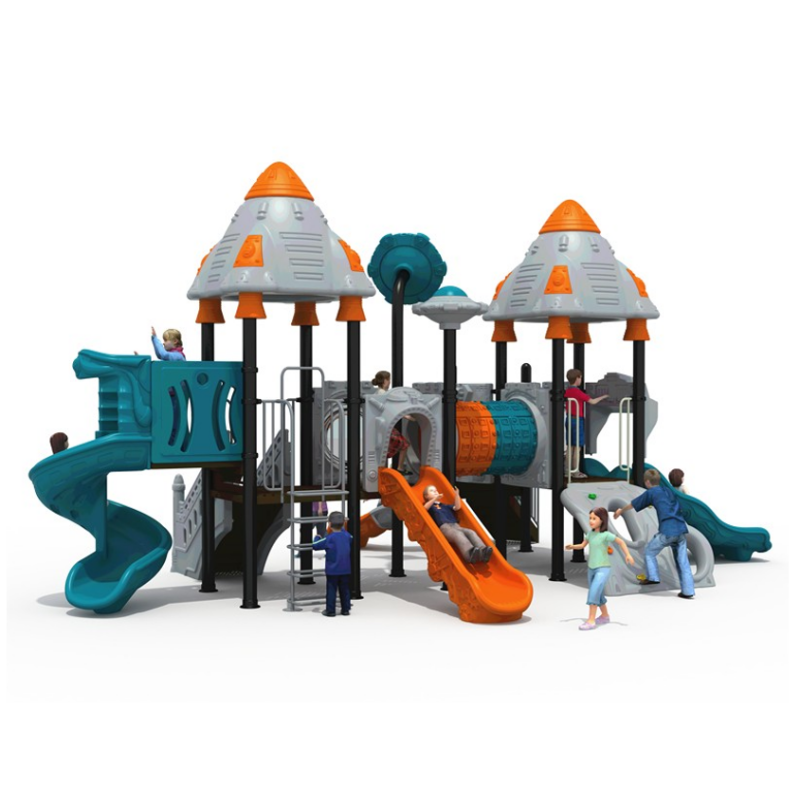
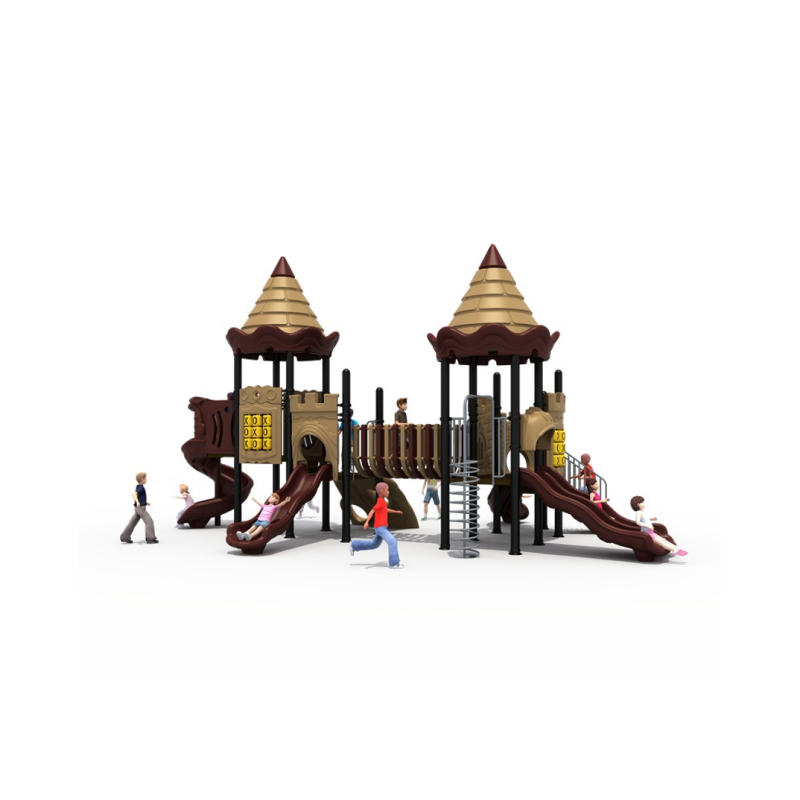

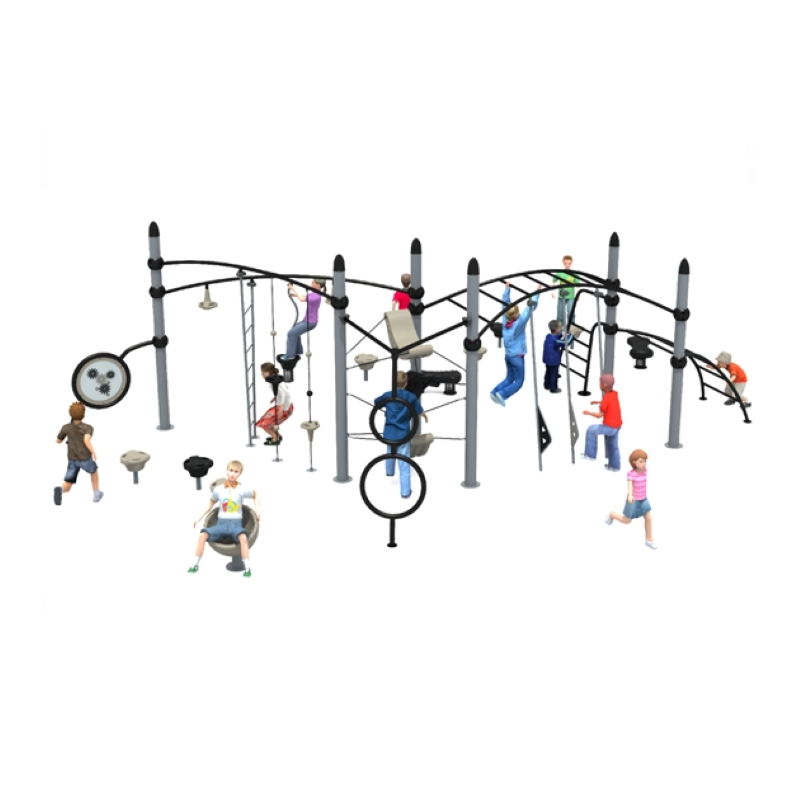
Introduction: The Silent Cracks in Playtime
Have you ever watched children laugh and climb on a playground, only to notice a wobbly rail or a faded slide? That moment hints at a deeper question: Are today's kids' public outdoor playgrounds truly built to withstand the test of time and joyful chaos? In parks from New York to Tokyo, these spaces face relentless wear—sun, rain, and energetic play—that can turn fun into frustration or even risk. As a technical expert at Shenyang Golden Childhood Playground Equipment Co., Ltd., I've seen how overlooked engineering details impact communities. Let's dive into what makes a playground not just fun, but enduringly safe and engaging.
Deepening the Pain Points: Where Playgrounds Fall Short
Industry challenges often lurk beneath vibrant colors. First, material degradation is a major issue. Many playgrounds use standard plastics or metals that fade, crack, or corrode within 3-5 years under UV exposure and weather cycles. For example, in coastal areas like Florida, salt air accelerates rust on steel frames, leading to costly replacements every few years—a municipal budget drain of up to $50,000 per site. Second, safety inconsistencies arise from poor design integration. Slides or swings might meet initial standards but fail under dynamic loads from older kids, causing injuries and liability claims averaging $20,000 per incident in the US. Third, maintenance inefficiencies plague operations. Non-modular designs require full disassembly for repairs, doubling labor hours and downtime that disappoints families.
Solutions: Engineering Resilience into Play
Addressing these requires precision. For material woes, we advocate advanced composites like UV-stabilized polyethylene blended with fiberglass, which resists fading and impact for over 10 years. Paired with hot-dip galvanized steel coated with anti-corrosive polymers, this cuts lifecycle costs by 40%. To boost safety, dynamic load testing simulates extreme use—e.g., 150-pound impacts on swing seats—ensuring components exceed ASTM F1487 standards by 15%. Modularity is key: our snap-lock systems allow part swaps in under an hour, slashing maintenance time by 60% and keeping play areas operational.
Customer Success Stories: Data-Driven Joy
Real-world results speak loudly. In Seattle, Washington, a city park upgraded with our equipment saw a 70% reduction in repair calls over two years, with parent satisfaction scores jumping from 65% to 92%. A manager noted, "The durability has transformed our community's trust." In Berlin, Germany, a school playground using our modular design reported a 50% faster installation and 30% lower annual upkeep costs. The principal shared, "It's the smartest investment for our kids' safety." In Melbourne, Australia, a coastal installation with anti-corrosive coatings showed zero rust after five years, saving $15,000 in projected replacements. A local engineer said, "This tech sets a new benchmark."
Applications and Partnerships: Scaling Impact
Our solutions fit diverse scenes: urban parks, schoolyards, and resort play zones. We collaborate with procurement teams from entities like City of Toronto Parks and European School Networks, offering co-design sessions to tailor equipment. These partnerships, backed by ISO 9001 certification, ensure specs meet local codes—e.g., EN 1176 in Europe—fostering long-term trust and repeat orders.
FAQ: Answers for Engineers and Buyers
Q1: How do you test for long-term UV resistance?
A: We use accelerated weathering chambers simulating 10 years of sun exposure in months, measuring color retention and tensile strength per ASTM G154, ensuring less than 5% degradation.
Q2: What's the weight capacity for your modular joints?
A: Joints are rated for 500 lbs static and 200 lbs dynamic loads, validated through finite element analysis to prevent fatigue failures.
Q3: Are materials recyclable at end-of-life?
A> Yes, over 80% of components are recyclable—metals go to smelters, plastics are reprocessed into new parts, aligning with circular economy goals.
Q4: How do you handle custom designs for tight budgets?
A: Our parametric modeling software allows cost-efficient tweaks without retooling, cutting design time by 30% while maintaining safety margins.
Q5: What's the lead time for large orders?
A: Standard orders ship in 6-8 weeks; we optimize with just-in-time manufacturing and regional warehouses to reduce delays.
Conclusion: Build Playgrounds That Endure
Great playgrounds aren't accidents—they're feats of engineering that balance joy with longevity. By tackling degradation, safety gaps, and upkeep hurdles, we help communities invest wisely. If you're an engineer or buyer keen on specs, download our detailed technical whitepaper on material science, or contact our sales engineers for a personalized consultation. Let's craft spaces where kids' memories—and the equipment—last for generations.
