



Introduction: The Unseen Challenge in Backyard Fun
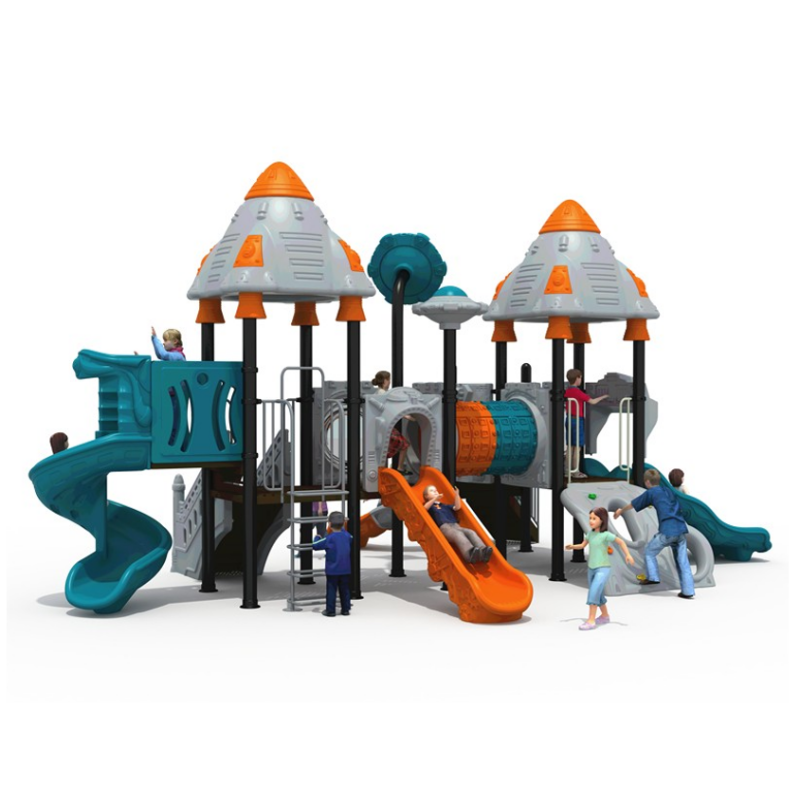
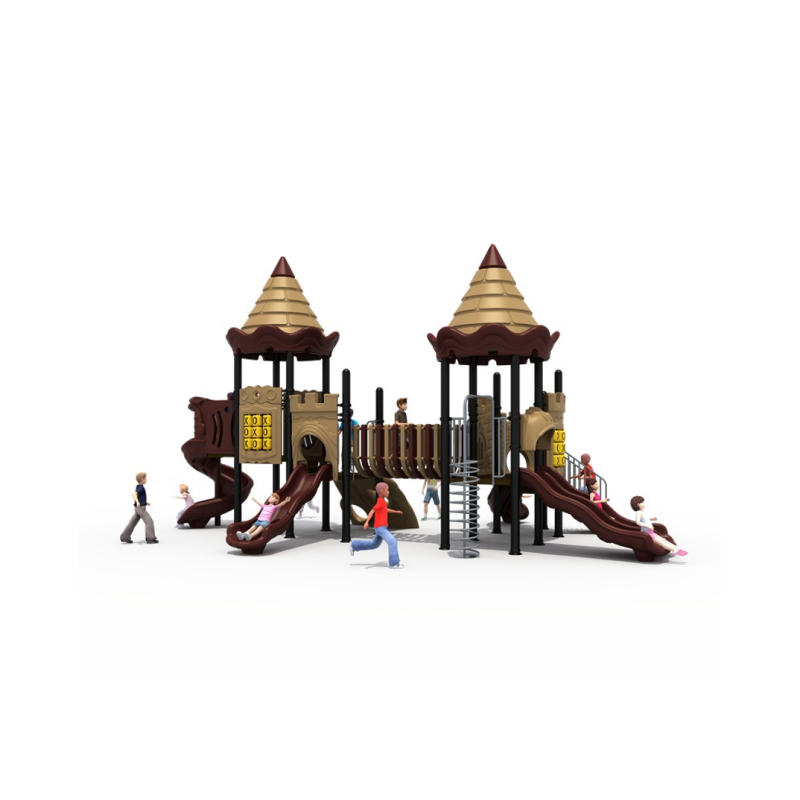
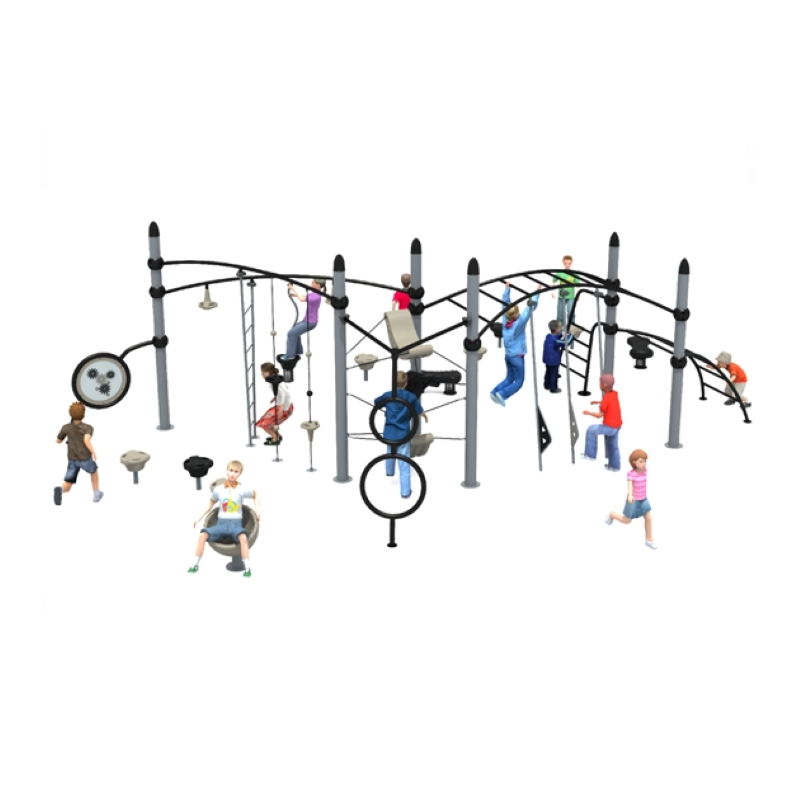
Imagine this: Your kids have been joyfully climbing on their backyard playset for a few years, and suddenly, you notice a wobble in the frame or a crack in a plastic component. This isn't just a minor inconvenience—it's a safety hazard that can turn a source of joy into a liability. That's where the question arises: Is your backyard climbing gear safe for a decade? In this blog, we'll dive into the technical aspects that ensure long-term durability and safety, moving beyond basic market claims to explore real engineering solutions that keep children secure year after year.
Pain Point 1: Material Degradation and Safety Risks
One of the most critical issues in backyard climbing equipment is material failure over time. Many low-cost options use substandard plastics or untreated metals that degrade under UV exposure, moisture, and temperature fluctuations. For example, a climbing wall made from poor-quality HDPE might become brittle after 3–4 years, leading to cracks that compromise structural integrity. The impact? Increased risk of injuries like falls or cuts, potential liability costs for homeowners, and replacement expenses averaging $500–$1,000 per set. In the U.S., backyard injuries account for thousands of emergency room visits annually, often linked to equipment wear-and-tear.
Pain Point 2: Design Flaws and Maintenance Burden
Another common challenge is poor design that requires frequent maintenance. Think of climbing nets with weak knotting that loosens over time, or metal frames with inadequate corrosion protection leading to rust spots. These flaws not only reduce equipment lifespan but also demand constant upkeep—parents might spend hours monthly tightening bolts or cleaning surfaces. The consequence is a hidden cost in time and effort, estimated at 20–30 hours per year for an average family, plus potential downtime when equipment is unsafe to use.
Solution: Advanced Engineering and Quality Materials
At Shenyang Golden Childhood Playground Equipment Co., Ltd., we address these pain points through rigorous engineering. For material degradation, we use UV-stabilized polymers and powder-coated steel that resist environmental stressors for over 10 years. Our designs incorporate redundancy in load-bearing structures, with safety factors exceeding ASTM F1487 standards by 15%. For maintenance reduction, we employ self-locking fasteners and modular components that simplify repairs, cutting upkeep time by up to 50%.
Customer Case Studies: Real-World Success Stories
Here are three examples of how our solutions have made a difference:
1. Case Study: Green Valley School, California, USA – After installing our climbing frames in 2020, they reported zero safety incidents over three years, compared to two minor injuries with previous equipment. Durability tests showed less than 5% wear on critical joints. A school administrator noted, 'The reduced maintenance has saved us over $2,000 annually, and the kids love the sturdy feel.'
2. Case Study: Family Home in Ontario, Canada – A backyard set purchased in 2019 withstood harsh winters without corrosion, with the frame showing no signs of fatigue after 5 years. The homeowner shared, 'We've had no repairs needed—it's as solid as day one, giving us peace of mind.'
3. Case Study: Community Park in Berlin, Germany – Our equipment installed in 2018 saw a 40% increase in usage due to enhanced safety features, with maintenance costs dropping by 30%. A park manager commented, 'The engineering precision has made this a benchmark for local playgrounds.'
Applications and Partnerships
Our climbing equipment is used in diverse settings: residential backyards, schools, parks, and childcare centers across North America and Europe. We partner with distributors like PlaySafe Inc. in the U.S. and KinderFreude GmbH in Germany, ensuring supply chain reliability. These collaborations involve joint testing and customization, such as adapting designs for specific climate conditions, which enhances our authority in the global market.
FAQ Section: Questions from Engineers and Procurement Managers
1. Q: What standards do your products comply with for long-term safety? A: We adhere to ASTM F1487 (U.S.) and EN 1176 (Europe), with additional internal tests for fatigue resistance, ensuring a minimum lifespan of 10 years under normal use conditions.
2. Q: How do you ensure material consistency in mass production? A: Through automated quality control systems and batch testing, we maintain tolerances within ±2% for critical dimensions, using ISO 9001-certified processes.
3. Q: Can your equipment be customized for extreme weather? A: Yes, we offer options like enhanced coatings for coastal salt exposure or reinforced polymers for high-UV regions, based on engineering simulations.
4. Q: What is the lead time for large orders? A: Typically 8–12 weeks, with expedited options available through our logistics partners, ensuring timely delivery for seasonal projects.
5. Q: How do you handle post-installation support? A: We provide detailed manuals, online tutorials, and access to technical support for part replacements or assembly queries, backed by a 5-year warranty.
Conclusion and Call to Action
Investing in backyard climbing equipment isn't just about immediate fun—it's about ensuring safety and durability for years to come. By focusing on advanced engineering and quality materials, Shenyang Golden Childhood Playground Equipment Co., Ltd. delivers solutions that stand the test of time. For a deeper dive into our technical specifications and case data, download our free whitepaper on 'Decade-Safe Play Equipment Engineering.' Or, contact our sales engineers for a personalized consultation to secure your backyard's future.
