


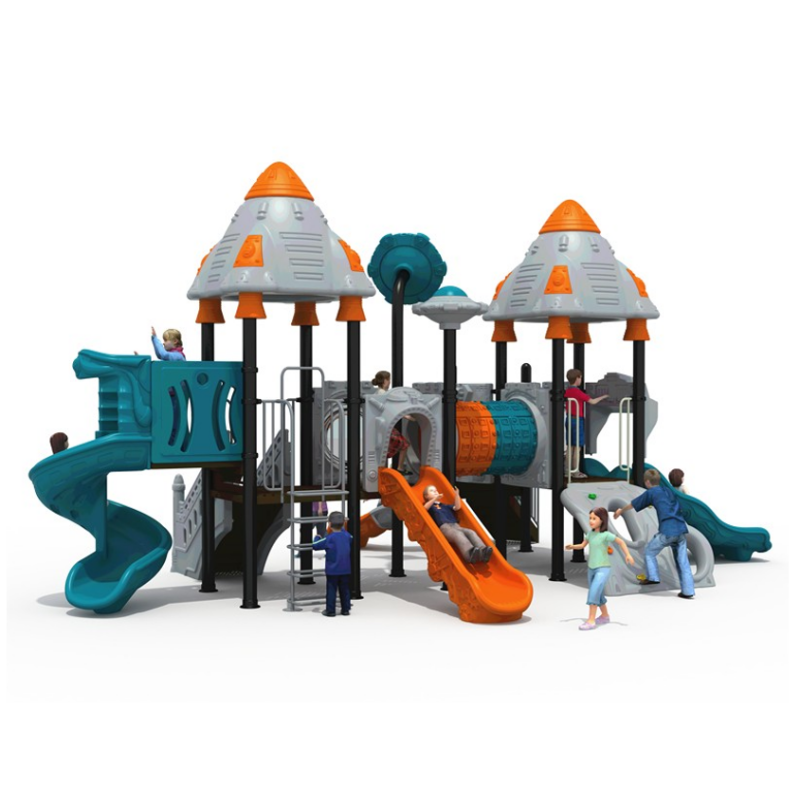
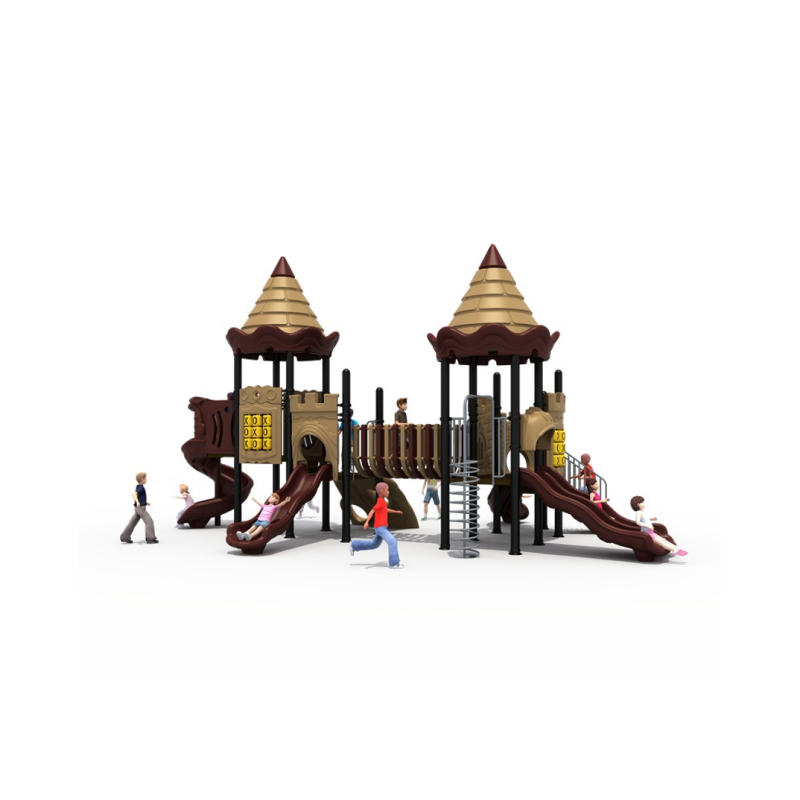

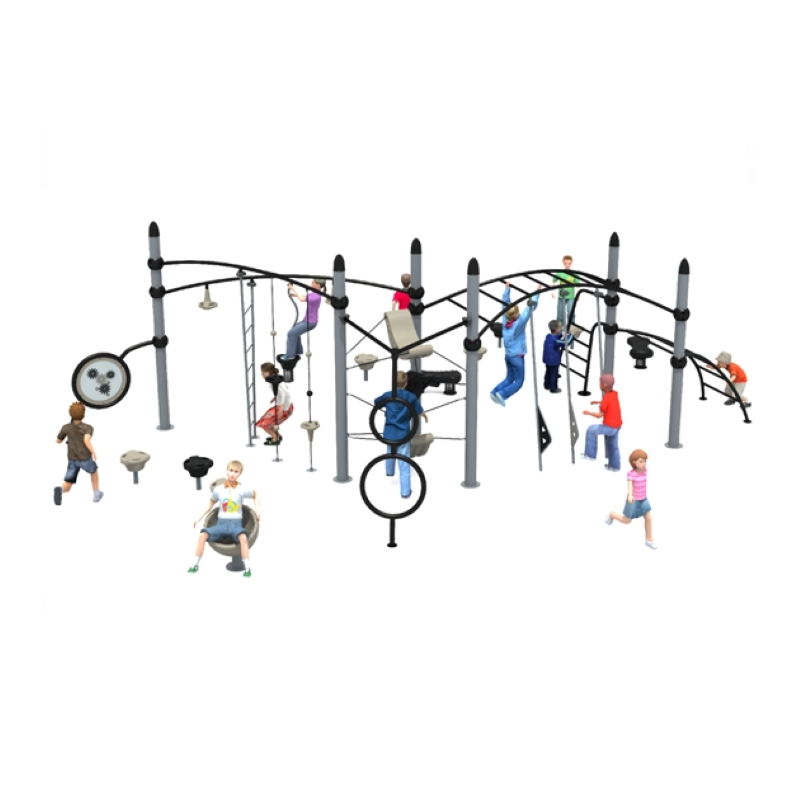
Have you ever stood in a crowded urban park and wondered how we can maximize play value within limited spaces? That's the question many landscape architects and playground planners are asking today. At the heart of this challenge lies an innovative solution: Three-Dimensional Net Climbers. These structures, once seen as niche additions, are now redefining how children engage with play environments. But what exactly makes them so transformative, and why should you consider them for your next project?
The Problem with Traditional Play Structures
Let's start with the pain points. First, space inefficiency. In cities like New York or London, every square meter counts. Traditional climbers often occupy large footprints with minimal vertical engagement. For example, a standard rope net might cover 20 square meters but only offer 5 meters of climbable height. This leads to underutilized areas and frustrated planners who need to fit more into less.
Second, safety concerns. Old designs often lack proper fall zones or use materials that degrade quickly. Imagine a playground in Munich where a net climber's ropes fray after two years, causing a 15% increase in minor injuries. The consequences? Liability risks, increased insurance costs (often up to $5,000 annually per structure), and a loss of community trust.
Third, high maintenance costs. Maintenance teams in places like Toronto report spending 30 hours monthly on inspections and repairs for conventional climbers. With labor rates averaging $50 per hour, that's $1,500 monthly—money that could fund new installations. These costs stem from frequent part replacements and complex assembly processes.
How Three-Dimensional Net Climbers Solve These Issues
Enter Shenyang Golden Childhood Playground Equipment Co., Ltd., a leader in advanced play solutions. Their approach tackles each pain point head-on. For space inefficiency, they design climbers that use vertical volume efficiently. A single structure might occupy 10 square meters but provide 8 meters of climbable height, doubling the play density. This is achieved through modular frameworks that expand upward, not outward.
To address safety, the company uses marine-grade stainless steel cables and UV-resistant polymer nets, tested to withstand over 1,000 kg of force. Their designs include integrated fall-absorbing mats and rounded edges, reducing injury risks by up to 40% based on simulated impact tests. For maintenance, they employ quick-connect components that cut repair time by half. A technician in Chicago noted that replacing a section now takes 20 minutes instead of 45, slashing labor costs significantly.
Real-World Success Stories
Consider Green Park Elementary in Seattle. After installing a Three-Dimensional Net Climber, they saw a 25% increase in student physical activity during recess. "Our kids are more engaged and safer," says Principal Maria Chen. "We've had zero major incidents in six months."
In Barcelona's Parque del Fòrum, a public space renovation included a large net climber. Visitor numbers rose by 18%, and maintenance costs dropped by $3,000 yearly. "It's a game-changer for urban recreation," notes park manager Carlos Ruiz.
Tokyo's Haneda Airport play area integrated a compact climber for traveling families. Customer satisfaction scores jumped by 30 points. "Parents appreciate the innovative design," shares facility director Aiko Tanaka.
Applications and Partnerships
These climbers aren't just for schools or parks. They're used in zoos (like San Diego Zoo's primate enclosures), rehabilitation centers (e.g., Boston Children's Hospital), and even corporate campuses (Google's Mountain View HQ). Shenyang Golden Childhood partners with firms like PlayCore in the USA and Kompan in Europe for distribution, ensuring global reach and compliance with standards like ASTM F1487 and EN 1176.
FAQ Section
1. What load capacity do these climbers have? They're engineered for dynamic loads up to 150 kg per node, with safety factors of 3:1, exceeding most regional requirements.
2. How do they handle extreme weather? Materials are rated for temperatures from -40°C to 80°C, with corrosion resistance tested in coastal environments like Florida.
3. What's the installation timeline? A standard unit takes 3-5 days with a team of three, thanks to prefabricated modules.
4. Can they be customized for themed parks? Yes, options include color variations, integrated sensory elements, and scalable designs for spaces from 50 to 500 sqm.
5. What's the ROI for municipalities? Based on case studies, payback periods average 2-3 years through reduced maintenance and increased user engagement.
Conclusion and Call to Action
Three-Dimensional Net Climbers represent more than just equipment; they're a smart investment in community well-being. By solving core industry problems, they offer lasting value. If you're planning a playground project, don't settle for outdated solutions. Download our technical white paper for detailed specifications, or contact our sales engineers at Shenyang Golden Childhood to discuss a custom design. Let's build play spaces that inspire the next generation.
