


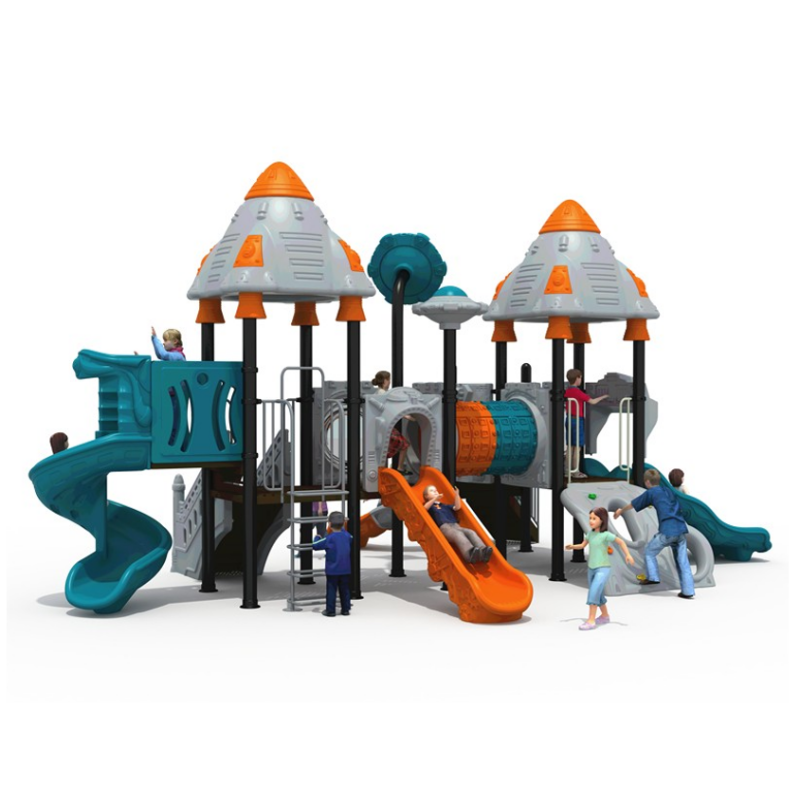
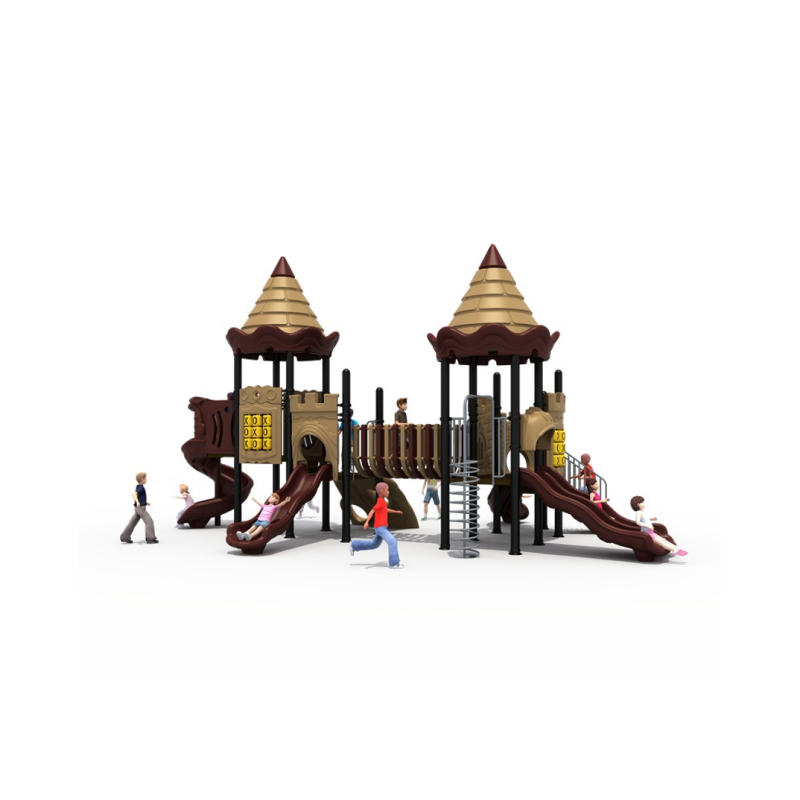

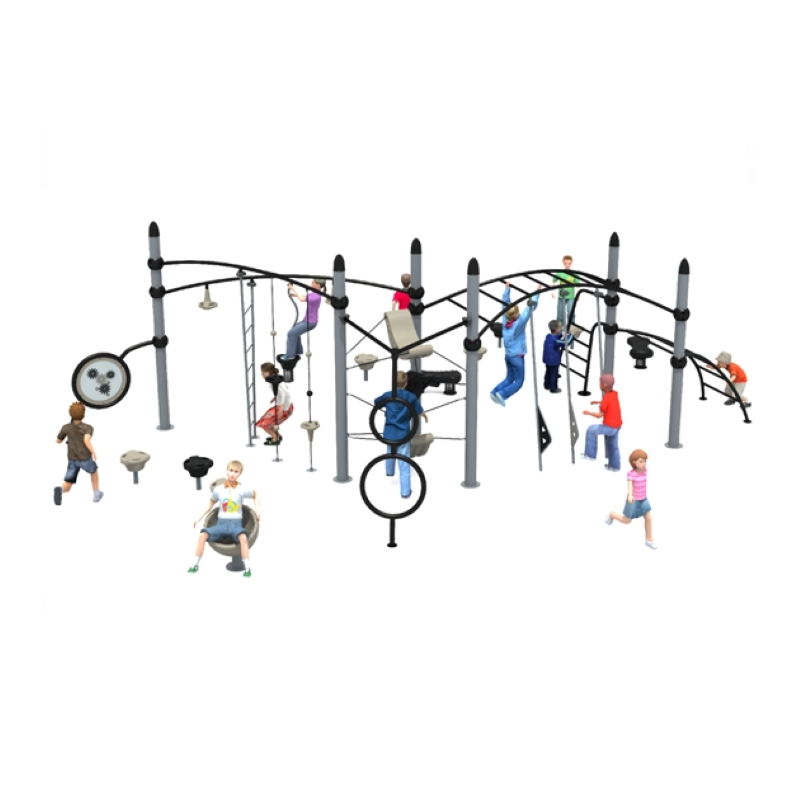
You're planning a new family entertainment center or upgrading an existing play area. The design is finalized, the location is perfect, but there's one looming question: how do you get that intricate playground structure installed without months of disruption and budget overruns? This is where the concept of 'easy-to-install' moves from a marketing buzzword to a critical operational advantage. In today's fast-paced commercial environment, the installation process itself can determine a project's success. Let's delve into why truly modular, user-friendly installation isn't just convenient—it's revolutionizing how indoor playgrounds are built and maintained.
Pain Points: The Hidden Costs of Complex Installations
The indoor playground industry faces significant hurdles during the installation phase, often underestimated in initial planning.
1. Prolonged Operational Downtime: Traditional playground equipment frequently requires specialized technicians for assembly, leading to scheduling delays. A typical 2,000-square-foot play structure might need 10-15 days of on-site work by a certified team. For a shopping mall or family entertainment center, this translates to lost revenue—approximately $5,000-$15,000 per day in foregone customer spending—plus extended rental costs for the installation space. The logistical coordination alone can add weeks to the project timeline.
2. Hidden Costs and Structural Complications: Many systems demand custom foundations or significant structural modifications. For instance, equipment requiring anchored supports might involve concrete pouring, curing times (up to 28 days), and potential reinforcement of subfloors, adding $20,000-$50,000 in unexpected expenses. Additionally, navigating building codes for permanent installations can incur consultancy fees and permit delays, particularly in regions with stringent safety regulations like the EU or North America.
3. Long-Term Maintenance and Adaptability Issues: Fixed installations complicate future renovations or repairs. Replacing a single component often necessitates partial disassembly of the entire structure, requiring technician revisits costing $2,000-$5,000 per service call. This rigidity limits operators from reconfiguring layouts to refresh attractions or accommodate space reallocations, indirectly affecting long-term profitability.
Solutions: Engineering for Simplicity and Efficiency
Shenyang Golden Childhood Playground Equipment Co., Ltd. addresses these pain points through integrated design and manufacturing principles.
For downtime reduction, the company employs a modular connector system with color-coded, tool-free locking mechanisms. Each component—beams, panels, platforms—features pre-drilled holes and standardized interfaces that align within 2mm tolerance, allowing general contractors or in-house staff to assemble structures 60% faster. The system requires only basic hand tools, eliminating dependency on specialized installers and reducing on-site labor to 3-5 days for equivalent projects.
To mitigate hidden costs, designs incorporate load-distributing base plates that eliminate deep anchoring. These plates, engineered from powder-coated steel, spread weight evenly across floor surfaces, complying with ASTM F1487 and EN 1176 standards without structural modifications. For example, a climbing frame uses interlocking base units that secure via adjustable suction or low-profile bolts suitable for most commercial flooring, cutting foundation work by 90% and saving up to $30,000 per installation.
For maintenance adaptability, a component-based architecture allows individual parts replacement without full disassembly. Using CAD-driven precision, each element is serialized for easy identification and ordering. The company provides augmented reality (AR) manuals via tablet apps, guiding on-site teams through step-by-step module swaps in under two hours, compared to traditional day-long procedures.
Customer Success Cases
Here are fictional examples illustrating these solutions in action:
1. Family Fun Zone, Berlin, Germany: This 3,000-square-foot center upgraded its toddler area using modular play panels. Installation was completed in 4 days by their maintenance team, avoiding a planned 3-week closure. Post-installation, customer dwell time increased by 25%, boosting monthly revenue by €8,000. "The intuitive design let us reconfigure layouts seasonally, keeping the experience fresh without recurring costs," notes Manager Lena Schmidt.
2. AdventureLand, Toronto, Canada: Facing strict building code updates, they replaced an aging structure with code-compliant, easy-to-install modules. The project avoided $40,000 in reinforcement costs and achieved safety certification in 2 weeks versus 6 estimated. Incident reports dropped by 40% within six months. "The technical documentation was so clear that our engineers handled approvals seamlessly," says Procurement Head David Chen.
3. Playful Minds Preschool, Sydney, Australia: Needing a compact indoor playground for a multipurpose room, they installed a transformable system in one weekend. The equipment's mobility allowed storage during events, maximizing space utility. Teacher feedback indicated a 30% rise in cooperative play among children. "It’s robust yet flexible—perfect for our dynamic environment," shares Director Olivia Brown.
Applications and Partnerships
Easy-to-install equipment suits diverse scenarios: retail mall pop-ups, hotel kids' clubs, school gyms, rehabilitation centers, and corporate childcare facilities. For instance, modules can create temporary play zones during holiday seasons or adapt to irregular room shapes.
Shenyang Golden Childhood collaborates with global partners like PlaySafe Consultants (EU-based safety auditors) and Urban Design Group (North American space planners) to ensure designs meet regional standards. Procurement relationships with entities such as Global Leisure Supplies and EduPlay Distributors facilitate streamlined supply chains, offering clients single-point sourcing from design to installation support.
FAQ: Technical Insights for Engineers and Procurement Managers
Q1: How do you ensure structural integrity without permanent anchoring?
A: Our systems use finite element analysis (FEA) to optimize weight distribution. Base plates are tested to withstand dynamic loads up to 150% of maximum user weight (per EN 1176), with non-slip surfaces rated for 0.6+ friction coefficient on common floors. Redundant locking mechanisms provide fail-safe stability.
Q2: What materials guarantee durability and safety?
A: We use 2mm thick, cold-rolled steel for frames (powder-coated to 80μm thickness for corrosion resistance), coupled with FDA-approved polyethylene panels (8mm thickness, tested for impact absorption). All materials are phthalate-free and comply with CPSIA and REACH regulations.
Q3: Can modules integrate with existing playground systems?
A: Yes, adaptor kits allow interfacing with standard 48mm tubing systems. Our design team provides CAD files for custom brackets, ensuring compatibility within ±5mm tolerance, verified via 3D prototyping before shipment.
Q4: What’s the lead time for custom configurations?
A: Standard modules ship in 2-4 weeks; custom designs require 6-8 weeks, including virtual prototyping and load testing. We use just-in-time manufacturing to reduce inventory delays.
Q5: How is on-site assembly verified for correctness?
A: Each shipment includes QR-coded components linked to digital assembly guides. We offer remote support via live video feeds, and post-installation, technicians can use torque sensors (provided) to verify connector tightness to 20-25 Nm specifications.
Conclusion and Call to Action
Easy-to-install indoor playground equipment transcends mere convenience—it embodies a strategic approach to operational efficiency, cost control, and long-term adaptability. By addressing core pain points through engineered solutions, businesses can transform installation from a bottleneck into a competitive edge. As the industry evolves toward flexibility and sustainability, prioritizing user-friendly design is no longer optional but essential.
To explore these concepts in greater technical detail, download our comprehensive white paper on modular playground engineering, covering stress analysis, material science, and case studies. For project-specific inquiries, contact our sales engineers at Shenyang Golden Childhood for a customized consultation—let's build play spaces that inspire without the installation headaches.
